In our work, we employed LIWC to analyze each word of an input text automatically, attributing it to a psycholinguistic class. Then, it calculates the overall frequency of each one of its categories in the input text. We relied on the frequency report returned by LIWC for the analyses of our second research question, implementing minor pre-processing, namely the removal of URLs and covert all text inputs to lowercase.
- The left told us “You’re not welcome anymore.” In fact, you’re not even left—you’re right, or, you know, if it’s really pissed at you, you’re alt-right, or you’re a darling of the alt-right.
- But I think the IDW has been and will continue to be, with other names and leaders, part of the ongoing dialectic evolution of our society.
- They are not driving the conversation, and sometimes are being driven from it.
- The thinkers profiled included the neuroscientist and prominent atheist writer Sam Harris, the podcaster Dave Rubin, and University of Toronto psychologist and Chaos Dragon mavenJordan Peterson.
- In 2018, Weinstein, Peterson, and Harris debated the usefulness of the conceptual belief in God.
It is designed to be transparent and flexible, allowing users to explore word use in various forms. LIWC is used in research to analyze the ways people use words when communicating, which can provide rich information about their beliefs, fears, thinking patterns, social relationships, and personalities. Further details on how LIWC was built are available in its documentation (Pennebaker et al. 2015). The extensive research employed in developing LIWC motivated us to use it in our methodology.
What Is The Intellectual Dark Web?

The 1980s–1990s political correctness debates were in many respects debates over the legacy of the radical politics and counterculture of the 1960s. Allan Bloom kicked things off with his 1987 best seller The Closing of the American Mind, which argued that the influence of ’60s-era student, feminist, and Black Power movements led college students to reject traditional liberal arts curricula. Roger Kimball later upped the ante, alleging that the professors of the 1980s were former student protesters. Frustrated by the failure of their movements to destabilize American society, Kimball claimed, they channeled their discontent into “politically motivated” fields like queer theory or African-American studies, said to be inspired by “postmodern” Continental thinkers like Michel Foucault and Jacques Derrida. The IDW figures were hardly the only public intellectuals critical of the rise of illiberal progressivism in academia, social media, and mainstream journalism.

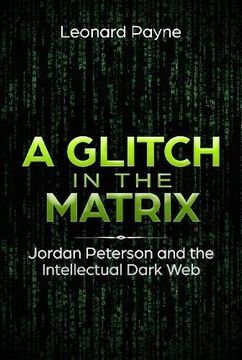
The Intellectual Dark Web: A History (and Possible Future) Paperback – March 17, 2025
But his demeanor can make him come across as a blunter instrument than he actually is, and he seems to enjoy the limelight too much to refine his message or change his tone. Defectors from academia are generously represented here, but the concerns of the intellectual dark web go far beyond performative wokeness on college campuses or Twitter pile-ons in the name of social justice. The essence of the movement, as I see it, is having the courage to stand up to groupthink, even if it means losing friends or having your positions willfully misconstrued because they don’t fit neatly in a particular ideological box. It’s not about liberals beating up on liberals but, rather, understanding that the same tribalism and regressive thinking that is damaging the Republican Party, perhaps beyond repair, is also wreaking havoc on Democrats and their allies. For the record, I first had such questions several years ago when I interviewed the couple, around the time Weiss’s IDW piece came out, for an article I ended up shelving. Weinstein and Heying told me of a colleague and her students being ejected from a no-whites-allowed campus event on that day; the faculty member herself recollected that she and the students made a voluntary exit after realizing that the event was meant as people-of-color-only, despite being told they were welcome to stay.
But this typically did not include much consideration of the enabling terms of thought or discussion itself — least of all, of the media within which these take place. Douglas Murray has been fighting with Joe Rogan and comedian Dave Smith over Palestine and Second World War revisionism. In response, Triggernometry host Konstantin Kisin has published a video and article defending Murray’s arguments from expertise and personal experience. Kisin cites the increasingly poor quality of public debate as evidence that he was mistaken in the core “anti-woke” contention that open debate always tends toward truth.
Anti-surrogacy Activists Are Looking Out For The Kids
This thirst explains how Carlson dismissed those caring about Oct. 7 as being obsessed with “foreign” matters before traveling to what seems like every country in the world to extol their virtues, fictional or otherwise. This thirst explains how Johnson, a Christian husband and father, embraced and emulated Andrew Tate, a Muslim pimp and self-professed abuser of women, before defending himself by misappropriating a Bible verse. This thirst explains how Candace Owens went from being an immovable supporter of Israel to one of its most enthusiastic (and spectacularly ignorant) critics seemingly overnight, regurgitating the same antisemitic Wikipedia articles that were available while she was flying to Israel to celebrate the opening of the U.S. In recent years, a group has emerged that, while existing outside of the mainstream, represents the antithesis of the intellectual dark web.

Can Politics And Truth Coexist?
But what he seems to forget is that the evolutionary “right” of free speech, surreptitiously employed by those in power to demean and undermine minorities, has mustered a sort of religiosity of its own. As an example, when Weinstein was confronted by student activists imploring him to reconsider his stance on the Day of Absence, he responded with a trenchant “thou shalt not silence me” ambrosia. The resulting mayhem brought about by his appearance on Fox News invited a significant contingent of alt-right hooligans, as well as a squad of riot police, to campus on May Day. This threat of violent Western chauvinism spurred a mass exodus of students from Evergreen, disenchanted by the administration’s lack of action.
These new figures were also using new media, especially podcast platforms, to reach younger audiences and generate buzz for their intellectual movement. The term “Intellectual Dark Web” (IDW) describes a group of public intellectuals, academics, and commentators who engage in discussions on controversial, often politically sensitive topics that are typically avoided or censored in mainstream media and academic circles. In absolute terms, dark web intellectuals enjoy far more access to the mainstream than genuine leftists. But in relative terms, they have far lower status than their intellectual forebears of 20 or even 10 years ago. They are not driving the conversation, and sometimes are being driven from it. This loss of relative social status helps explain the anger and resentment that Weiss describes and to some extent herself embodies.
The “Intellectual Dark Web,” Explained: What Jordan Peterson Has In Common With The Alt-right
In the 1998 congressional elections, Democrats gained seats, the first time this had happened for an incumbent president’s party since 1934, and Gingrich was forced to resign. Angry at Americans’ overwhelming rejection of his views, Bozell moved his entire family to Francisco Franco’s fascist Spain in 1965. A few years later, he returned to the United States, which he began treating as a satanic force following the Supreme Court’s Roe vs. Wade decision which established a national right to abortion. “The Catholic Church in America must break the articles of peace, she must forthrightly acknowledge that a state of war exists between herself and the American political order,” Bozell’s magazine, Triumph, proclaimed. Dennis Prager, the reactionary radio host and founder of video propaganda mill PragerU, described the strategy explicitly during a conversation with Dave Rubin, a podcaster who now identifies as right-wing, but was pretending to be progressive when he was included in Weiss’s article.
What Was The Intellectual Dark Web?
Following Liu’s own invented state of Basuria or Bāshǔlìyàguó 巴蜀利亚国, his followers have begun inventing their own. For Liu, China is no longer a nation, but the remains of a nation, peopled by the fellaheen — the word in Arabic is فلاحين, close enough to the Chinese nóngmín 农民, or the English “peasant,” but Spengler uses it to refer to a fallen class that has been robbed of national destiny. The fellaheen (fèilā 费拉 in Chinese) are a post-historical people (史后之人 shǐ hòu zhī rén), and Liu marks the end of that history around the Qin Dynasty (221 BC–206 BC).
The IDW Never Had A Viable Theory Of Change
So there is a way in which everybody should think twice about why you expect the people are on the political spectrum where you think they are, because maybe they aren’t. In each case, you ought to just check whether or not you think that for a good reason or you just think that because you’ve heard that somebody’s over there. It at least, perhaps, seems to be particularly concerned with these kinds of phenomena that are occurring on the left. And one wonders…I mean, there are certainly examples of speech prohibitions on campuses on the right. Like, certain groups, a pro-Palestinian group or something that might be facing some sort of obstacles on campus.
These changes explain why Weiss and her arm’s-length comrades in arms feel so embattled. What they all share is not a general commitment to intellectual free exchange but a specific political hostility to “multiculturalism” and all that it entails. In previous decades, their views were close to hegemonic in the intellectual center. This was reinforced by individual intellectual incentives to cultivate contrarianism for the sake of fame, or, as Kitcher describes it, the “temptation to gain a large audience and to influence public opinion by defending ‘unpopular’ views” — views that, in truth, mirrored widespread societal prejudices. The repeated outbreaks of fascination with the question of whether women and racial minorities are inherently unequal were not quite the product of the disinterested pursuit of the truth, Kitcher argued; otherwise, the same unpleasant questions would not keep appearing in radically different pseudoscientific forms.
If That’s The Case, Then What Does It Stand As An Alternative To?
Bret Weinstein has since weighed in, lamenting that Murray and Kisin have become what they once opposed. On March 1st, Redditor leocohen99 submitted a parody alignment chart with the caption “Intellectual Dark Web” to the /r/Jordan_Peterson_Memes4 subreddit (shown below). On March 16th, the Los Angeles Times6 published an op-ed article about the Intellectual Dark Web titled “A new movement to speak truth to identity politics is our best hope against regressive thinking.” On May 3rd, the libertarian news site Reason2 published an article titled “What Is the ‘Intellectual Dark Web?’.”
Many people across the political spectrum recognize that political correctness and its variants are not meaningless terms. It is no surprise that college students often experiment with activist projects that push the boundaries of liberal norms, and the members of the intellectual dark web are not the only people to have worried about the implications of some student rhetoric. The intellectual dark web appears with each passing day to be earning itself a place in the American conservative tradition. The fact that many of these figures have no links to the conservative movement or denounce the Republican Party is hardly evidence to the contrary.
Despite the obvious appeal these failed viewpoints have to wealthy white Christians, they have been unpopular with most Americans. But instead of updating their ideas to ones that are more workable or responsive to public sentiment, reactionaries simply rebrand their policies every few years in a cycle that is as predictable as fashion designers trying to bring back flared pants. The “Intellectual Dark Web” is a label for a loosely connected group of thinkers and commentators who engage in discussions on controversial topics that are often considered taboo or off-limits in mainstream discourse. They use alternative platforms to promote free speech, challenge ideological conformity, and discuss ideas that might otherwise be suppressed or ignored. “Woke capitalism” is a concept that circulated within the intellectual dark web. It argues that identity politics might seem radical, but in fact works hand-in-glove with the corporate world.