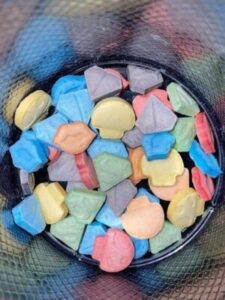
The idea is to have be able to experience an enhanced “Candyflipping”12 with a twist in the end and a smoother comedown. The whole experience is long-lasting and can be too intense as all of these molecules synergize and potentiate each other. If you microdose with the substance, you can and will look sober.On 50+ µg, it can be difficult to look sober, especially during the peak experience.At doses larger than 100 µg, it becomes nearly impossible to act sober.In addition to that, your pupils will be dilated.So do not talk to your boss or your parents when you’re tripping.
What Are The Potential Benefits?
The following year the only authorized manufacturer of LSD in the United States withdrew the drug from the market and transferred its supplies to the federal government. Research projects continued under the supervision of the National Institute of Mental Health, a governmental agency. Mood shifts, time and space distortions, and impulsive behaviour are especially hazardous complications to an individual who takes the drug. The individual may become increasingly suspicious of the intentions and motives of those around him and may act aggressively against them. Stable for moderate periods of time under normal temperatures and pressures.
Psychedelic Tourism
Some problems developed, as some casual users began to experience side effects, such as “flashbacks” and psychotic symptoms, though both of these are rare. Due to the spread of LSD use outside of the medical community, the United States government banned LSD (made it against the law to make, have or use) in 1967. By 1962, the Harvard faculty’s disapproval with Leary’s experiments reached critical mass. Leary was informed that the CIA was monitoring his research (see Government experiments below).
The most common subjects of such false beliefs are LSD, cannabis, and PCP. These misconceptions include misinformation about adulterants or other black market issues, as well as alleged effects of the pure substances. The availability of LSD had been drastically reduced by the late 1970s due to a combination of governmental controls and law enforcement. The supply of constituent chemicals including lysergic acid, which was used for production of LSD in the 1960s, and ergotamine tartrate, which was used for production in the 1970s, were placed under tight surveillance and government funding for LSD research was almost eliminated. These efforts were augmented by a series of major busts in England and Europe. One of the most famous was “Operation Julie” in Britain in 1978, named after the first name of the female drug squad officer involved; it broke up one of the largest LSD manufacturing and distribution operations in the world at that time, headed by chemist Richard Kemp.
Uses, Research, And Effects
Blotter Art can reach high prices, particularly when signed by prominent figures from the psychedelic movement. In 2004 MAPS (the Multidisciplinary Association for Psychedelic Studies) received almost $20,000 as a result of sales of Blotter Art signed by Albert Hofmann. In the summer of 1969, at a rock concert in Anaheim a member of the Brotherhood appeared wearing a T-Shirt reading “Orange Sunshine Express” scattering pills of Sand and Scully’s LSD around him. Other forms of LSD include small pills (microdots), gelatine sheets (window pane), liquid, which can be dropped onto sugar cubes, and powder. There is little testing data on these forms of LSD, although some reports put the average microdot at 50mcg LSD and the average window pane at mcg LSD. Liquid LSD is uncommon and is generally (but not always) diluted to ensure that 1 drop equals 1 dose.
Chemistry Of Lsd
In December 1988, a neighbor reported a strange chemical odor coming from an architectural shop at a Mountain View, California industrial park. Federal agents arrived to find 200,000 doses of LSD and William Pickard inside. Alfred Matthew Hubbard is reputed to have introduced more than 6,000 people to LSD, including scientists, politicians, intelligence officials, diplomats, and church figures. He became known as the original “Captain Trips”, travelling about with a leather case containing pharmaceutically pure LSD, mescaline, and psilocybin.
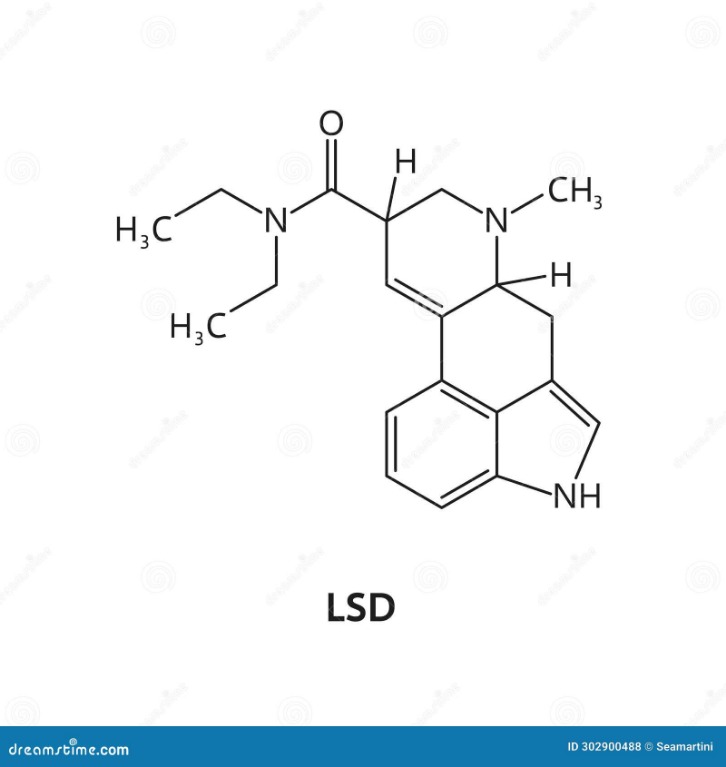
Because of this unpredictability, many users suggest having a “trip sitter” around during the trip, especially if it’s the first time. Ideally, the sitter is a known and trusted friend, and knows how to deal with bad trips. Lysergic Acid Diethylamide (LSD-25) is synthesized from lysergic acid, formed by ergot, a fungus that grows on rye. It was discovered by Swiss chemist Albert Hoffman in 1938, while he was working at Sandoz. He did not become aware of its effects until 1943, when he accidentally ingested some of the chemical.
Lysergic Acid
Amongst other cultural applications, psilocybin mushrooms are used as recreational drugs.2 They may be depicted in Stone Age rock art in Africa and Europe, but are more certainly represented in pre-Columbian sculptures and glyphs seen throughout the Americas. It is not included directly in the list of controlled substances, but it is included in an analogue act. There are more than 100 species of mushrooms around the world that contain psilocybin, a hallucinogenic compound. Archeologists believe humans have used these “magic mushrooms” since prehistoric times.
Albert Hofmann
Apperson drove the Ryder rental truck with the laboratory in it and Pickard followed in a Buick LeSabre; they had walkie-talkies to maintain communication. The DEA had a Kansas Highway Patrol car pull them over to not arouse suspicion; however, they immediately recognized something was wrong and Pickard, being a marathon runner, took off into the woods on foot and was not captured until the next day. From thyroid hormones to amphetamine to the “fen-phen” craze, weight-loss drugs have emerged and continuously faced scrutiny, largely due to unintended health effects. Leary founded a psychedelic religion based on LSD called the League for Spiritual Discovery and coined the phrase “tune in, turn on, drop out.” Alpert wrote a popular spiritual book called Be Here Now under the pseudonym Baba Ram Dass. Both men were eventually dismissed from Harvard but went on to become symbols of the psychedelic drug and hippie counterculture. Both psychology professors at Harvard University, Timothy Leary and Richard Alpert administered LSD and psychedelic mushrooms to Harvard students during a series of experiments in the early 1960s.
Blotter Art
HISTORY.com works with a wide range of writers and editors to create accurate and informative content. All articles are regularly reviewed and updated by the HISTORY.com team. Articles with the “HISTORY.com Editors” byline have been written or edited by the HISTORY.com editors, including Amanda Onion, Missy Sullivan, Matt Mullen, Christian Zapata and Cristiana Lombardo. Author Tom Wolfe based his 1968 non-fiction book, The Electric Kool-Aid Acid Test, on the experiences of Ken Kesey and the Merry Pranksters. The book chronicles the Acid Test parties and the growing 1960s hippie counterculture movement.
Is Acid The Same As LSD?
These government acid experiments—which also involved dozens of universities, pharmaceutical companies and medical facilities—took place throughout the 1950s and 1960s, before LSD was deemed too unpredictable to use in the field. Collectively, this growing body of research challenges assumptions of universal benefit and has contributed to calls for equity-centered approaches in psychedelic science. These include greater attention to structural context, culturally responsive practices, and the inclusion of diverse communities in both research and therapeutic design. All drugs have a route of administration, and many can be administered by more than one.
Studies on medicinal applications of psychedelics ceased entirely in the United States when the Controlled Substances Act was passed in 1970. LSD and many other psychedelics were placed into the most restrictive “Schedule I” category by the United States Drug Enforcement Administration. Schedule I compounds are claimed to possess “a high potential for abuse and the potential to create severe psychological and/or physical dependence” and have “no currently accepted medical use”,28 effectively rendering them illegal to use in the United States for all purposes. Despite objections from the scientific community, authorized research into therapeutic applications of psychedelic drugs had been discontinued worldwide by the 1980s.
Hundreds of participants, including CIA agents, government employees, military personnel, prostitutes, members of the general public, and mental patients were given LSD, many without their knowledge or consent. To guard against outward reactions, doctors conducted experiments in clinics and laboratories where subjects were monitored by EEG machines and had their words recorded.55 Some studies investigated whether drugs, stress or specific environmental conditions could be used to break prisoners or to induce confessions. The effects of psilocybin mushrooms come from psilocybin and psilocin.
- The concentrations of LSD in urine samples were followed over time at various temperatures, in different types of storage containers, at various exposures to different wavelengths of light, and at varying pH values.
- He renovated the space, instead using the underground for “hardcore” drug parties.
- For example, if optimizing more for fun and less for safety, a user may prefer not to use a blindfold and headphones, and may choose to drop acid at a festival or in nature instead of in a safe home environment.
- Back in 1943, a Swiss chemist Albert Hoffman accidentally poured a tiny amount of one of his old research substances on his hand and started tripping.
- The safest method to store LSD is wrapping it in aluminum foil or in a Mylar bag.
- Leary’s experiments (see Timothy Leary below) spread LSD usage to a much wider segment of the general populace.
You can find a list of legal psychedelic retreats and legal psychedelic therapy providers on TripSafe here. See the first few images on this page for an accurate depiction of low to moderate acid dosage visual effects. Penitentiary at Tucson, Arizona, Pickard conducted research on civil liberties, justice and drug-related topics. He wrote of his concerns about the opioid epidemic in the United States, and responded to media and academic requests on the subject.11 The website “Free William Leonard Pickard” posted regular updates about his activities until September 2017.12 In 2015 he published a novel, The Rose of Paracelsus. Although Apperson and Pickard were arrested moving the laboratory from the Atlas-E silo location, they never actually produced LSD at this site.
The popularization of LSD outside of the medical world was hastened when individuals such as author Ken Kesey participated in drug trials and liked what they saw. Tom Wolfe wrote a widely read account of the early days of LSD’s entrance into the non-academic world in his book The Electric Kool Aid Acid Test, which documented the cross-country, acid-fueled voyage of Kesey and the Merry Pranksters on the psychedelic bus “Furthur” and the Pranksters’ later ‘Acid Test’ LSD parties. In May 1953 Osmond gave Huxley his first dose of mescaline at the Huxley home.